How the Antlion's Pit Trap Works
June 1, 2026
The antlion's pit looks simple, but it's a small feat of engineering that uses physics to do the hunting.
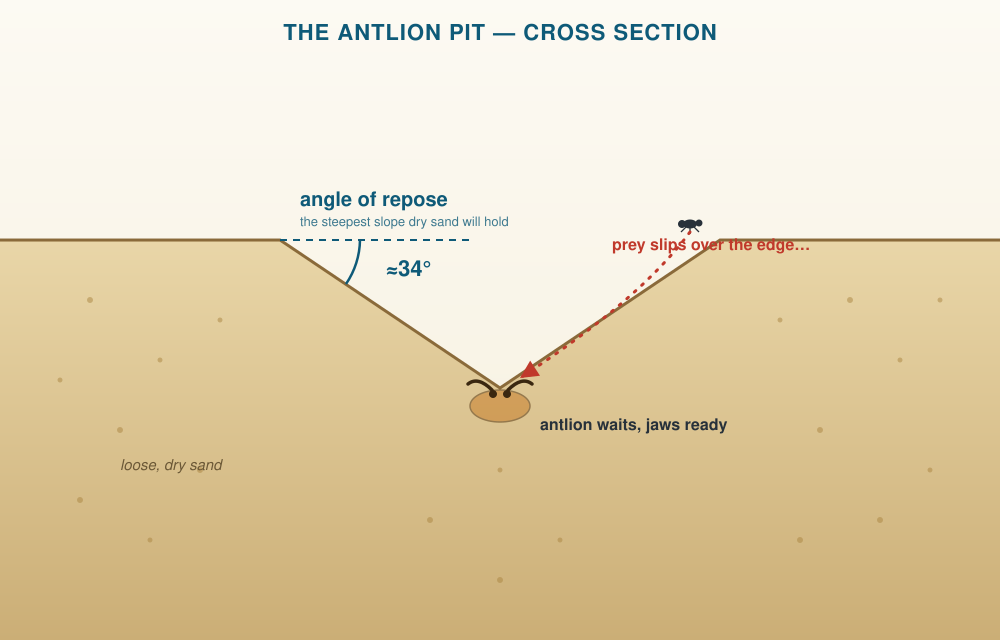
Built at the angle of repose
The larva digs its pit right at the steepest angle loose sand can hold — the "angle of repose." Any steeper and the walls collapse. This means the slightest disturbance near the rim sends sand (and prey) sliding toward the bottom.
The sand flick
Buried at the base with only its jaws exposed, the antlion feels the vibrations of struggling prey. It flicks sand upward to trigger miniature avalanches, knocking the victim down within reach.
Watch it yourself
Drop a small ant near the edge of your antlion's pit and watch the trap in action. For the full life story of this remarkable insect, see the antlion life cycle.